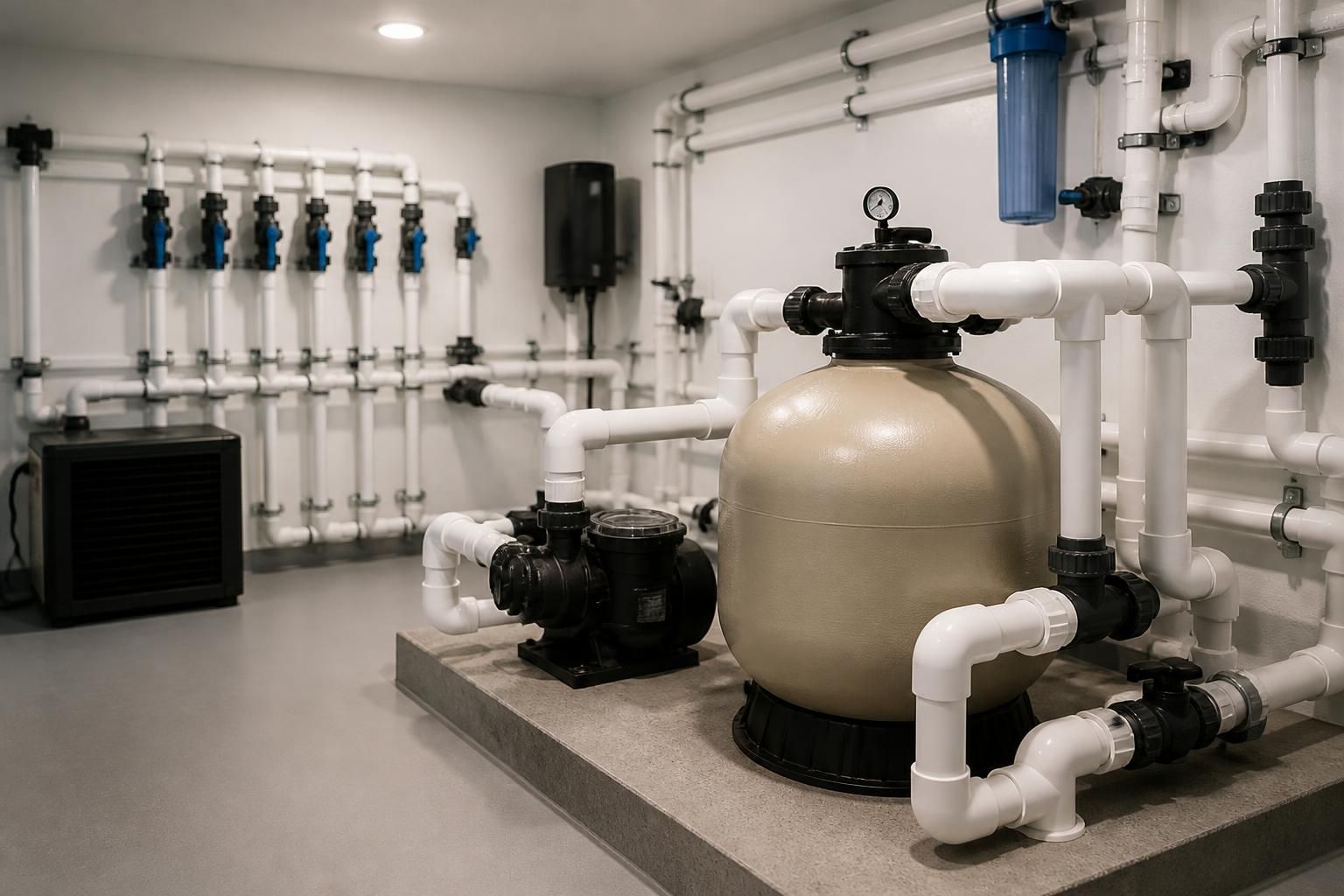
Weak circulation, cloudy water, stubborn debris, or a filter that keeps reading high pressure usually point to a hydraulic problem rather than a simple cleaning issue. When the system is not moving water with the right balance, the pool can look tired, take longer to recover after use, and put extra strain on pumps, skimmers, returns, and filters.
Nassau Pool Builders assesses the full water path, from the skimmer and main drain through piping, valves, pump curves, and filtration, so your pool on New Providence gets the turnover and clarity it needs without wasting energy or overworking equipment. We look at the whole system as one working circuit, not separate parts.
Pool hydraulics is about how water travels through the shell, pipes, pump, filter, and returns. If suction is too restricted, the pump can cavitate or struggle to prime. If return flow is uneven, some areas collect debris while others get too much force. On New Providence, where tropical heat, evaporation, salt air, and heavy rain can change demand quickly, that balance matters every day.
We review circulation volume, turnover targets, pipe sizing, skimmer pull, return placement, and valve settings so the pool matches its design load. A residential pool, a waterfront property, and a larger entertaining pool on New Providence do not need the same hydraulic setup, even if they use similar equipment brands such as Pentair, Hayward, or Jandy components.
Filtration has to suit the pool’s use, water load, and hydraulic layout. Some systems need the fine polishing of cartridge filtration. Others are better served by sand or high-rate sand filtration, especially when the pool handles more bather load or frequent debris. DE filtration can deliver very fine capture when the system is sized to suit the flow. The right answer depends on the full system, not just the filter label.
For pools across New Providence, we consider how the filter will react to heat, rinsing cycles, rainfall, and salt air exposure around exposed equipment areas. Filter tank pressure, service access, and the relationship between pump output and filter capacity all matter. A filter that is undersized for the pump can lead to recurring pressure spikes and poor clarity, while an oversized system can be inefficient or difficult to tune.
We evaluate debris load, water volume, desired circulation rate, and the kind of finish or feature package installed. A pool with water features, a spa spillway, or a swim-up bar may need more careful balancing than a simple basin because additional outlets change total flow demand.
We look at cartridges, manifolds, valves, pressure gauges, backwash arrangements where applicable, and the condition of the tank internals. If the filter media or element arrangement does not suit the system, the pool can lose clarity even when the pump is running for long periods.
The pump is only one part of circulation, but it is the heart of the system. Variable-speed pumps can give useful control when the plumbing and filtration are sized around the actual demand. If the pump curve does not match the pipe friction, TDH, and filter resistance, the pool may move too little water at low speed or too much at high speed.
We check whether the system is asking the pump to work against unnecessary resistance. Long runs, tight bends, undersized suction pipe, restrictive fittings, or partially closed valves can all reduce useful flow. On New Providence sites with limestone conditions or waterfront exposure, careful equipment placement also matters because service access and corrosion management affect long-term performance.
Cloudy water, weak skimmer action, and debris settling on the floor often come from one of a few causes. The pool may have limited circulation, a filter that is loading too quickly, a return pattern that leaves stagnant areas, or water chemistry outside the range that supports clear filtration. Pool water around New Providence also faces strong sun, humidity, and frequent use, which can accelerate the load on the circulation system.
We use the pool’s symptoms to narrow the cause. If the skimmer is pulling poorly, the issue may be at the suction side. If the pressure is too high too soon, the filter may be overloaded or the plumbing may be too restrictive. If the water looks hazy even after cleaning, the hydraulic pattern may not be giving the filter enough contact time.
A strong hydraulic and filtration system is built from the right parts working together. That includes PVC or CPVC piping, valves, drains, skimmers, returns, strainers, filters, and compatible automation controls. The way those pieces are laid out matters just as much as the brand names on the equipment pad.
Nassau Pool Builders works with the practical side of the system: pipe routing, fittings, flow indicators, filter placement, and equipment room access. Where a pool uses heaters, chillers, ORP/pH controls, or salt systems, we coordinate flow so those components receive the circulation they require without creating unnecessary head loss.
We look for cramped routing, service pinch points, and pipe runs that make tuning difficult. A clean equipment layout makes it easier to check pressure, isolate components, and keep the system balanced over time.
Correct placement helps the pool pull surface debris into the skimmers and send treated water back through the basin evenly. That circulation pattern helps support clearer water and fewer stagnant corners.
Saltwater pools need the hydraulic system to cooperate with the salt cell and circulation path. If flow is too low, the cell may not perform as intended. If flow is too high or the plumbing introduces excess turbulence, the system can become harder to balance. Salt, electrolysis, and chlorine generation all depend on good circulation and the right contact time.
We inspect the salt cell location, plumbing orientation, valve placement, and return strategy so the chlorination process works with the pool’s actual demand. Salt air and pool water can also be hard on exposed metal parts, so material selection and bonding details matter throughout the system.
Pool hydraulics on New Providence has to account for tropical heat, heavy rain, humidity, UV exposure, evaporation, salt air, limestone, groundwater, and hydrostatic pressure, especially on waterfront sites. Those conditions influence how water behaves, how equipment weathers, and how the system holds up over time. A pool at Paradise Island, Cable Beach, Lyford Cay, Old Fort Bay, Albany, Palm Cay, Sandyport, Ocean Club Estates, Winton, Yamacraw, Eastern New Providence, or Western New Providence all face the same island climate, but each site can need a different circulation strategy.
When we plan or refine a system, we look at depth, volume, feature load, deck layout, and exposure so the filtration side is not asked to solve a hydraulic problem on its own. That is where a lot of cloudy water and poor circulation starts: the pool was built with one demand in mind, then used with another.
At Nassau Pool Builders, the process starts with observation. We identify how the water is moving, where the resistance is building, and which parts of the system are carrying more load than they should. Then we review the equipment, the plumbing layout, and the filter relationship as one connected system.
For homeowners and property managers across New Providence, that means fewer guesswork adjustments and a clearer picture of what the pool actually needs.
Weak skimmer pull often points to suction restriction, air leakage, an imbalanced valve setting, or a pump that is not matched well to the plumbing layout.
A fast pressure rise can mean the filter is undersized for the load, the media or cartridges are collecting debris quickly, or the pump is pushing too much flow through the system.
Yes. A well-matched hydraulic setup can move water efficiently without forcing the pump or creating excessive turbulence at the returns.
Cloudiness can come from poor circulation, filter overload, fine particles passing through the system, or water chemistry that is not supporting clear filtration.
They do. Salt systems depend on steady circulation, correct cell placement, and plumbing that supports the generator without unnecessary restriction.
Yes. Features like fountains, deck jets, and waterfalls depend on balanced flow, so tuning the circulation can improve both appearance and performance.
If your pool on New Providence is showing weak circulation, rising pressure, uneven returns, or ongoing clarity problems, Nassau Pool Builders can assess the hydraulics and filtration side of the system and map out the next step. We work with the full water path so the equipment, plumbing, and filter are aligned with how the pool is actually used.
Reach out to discuss Pool Hydraulics & Filtration Systems for New Providence, The Bahamas, and we will help you get a clearer read on what the pool is telling you.

Start Your Project
Tell us about your lot, waterfront exposure, preferred finish, or equipment goals. We help homeowners, resorts, and property managers in Nassau, New Providence, understand the right path for design, construction, renovation, repair, or maintenance.